
Mustafizur Rahman IPL Exit: Shocking Political Fallout
1/6/2026, 4:58:00 PM
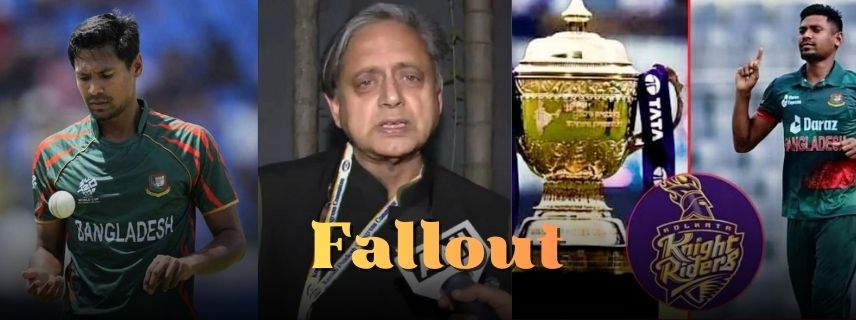
Mustafizur IPL Controversy Rocks Cricketing Relations
The Mustafizur IPL controversy has emerged as one of the most sensitive flashpoints in modern South Asian cricket, blending sport, politics, and security concerns into a single explosive episode. Bangladesh fast bowler Mustafizur Rahman was released from his IPL 2026 contract with Kolkata Knight Riders following direct instructions from the Board of Control for Cricket in India (BCCI), a move that has sparked outrage across Bangladesh cricketing and government circles.
Decision Taken at the Highest Level
The Mustafizur IPL episode took an unprecedented turn after it was revealed that the decision was made at the highest level of the BCCI without consultation with several of its own officials or the IPL Governing Council. Senior figures within Indian cricket were reportedly unaware of the move until it surfaced publicly, highlighting the exceptional nature of the decision.
Mustafizur Rahman, who had been bought for INR 9.20 crore at the IPL auction, was released abruptly, leaving Kolkata Knight Riders with no sporting explanation to offer. The situation immediately raised questions about governance, transparency, and the growing influence of geopolitical factors in franchise cricket.
BCCI’s Official Stand
BCCI secretary Devajit Saikia formally confirmed the decision, stating that recent developments compelled the board to instruct KKR to release the Bangladesh pacer. The Mustafizur IPL decision was framed as a precautionary measure amid rising tensions rather than a cricketing judgment.
While the BCCI maintained that it acted in the broader interest of the tournament, the lack of consultation has unsettled multiple stakeholders, including franchise officials and league administrators who were sidelined during the process.
Reaction from Bangladesh Cricket Board
The Mustafizur IPL fallout intensified when the Bangladesh Cricket Board (BCB) openly expressed concern over player security. BCB president Aminul Islam confirmed that the board does not currently feel secure sending its national team to India for the upcoming T20 World Cup 2026 matches.
Following internal meetings, the BCB formally approached the International Cricket Council (ICC), requesting that Bangladesh’s World Cup fixtures be relocated away from India. The board emphasized that its concerns were rooted in player safety rather than competitive or political motives.
Government Steps In with Broadcast Ban
The Mustafizur IPL controversy quickly moved beyond cricket administration when the Bangladesh Ministry of Information and Broadcasting imposed a nationwide ban on IPL telecasts. All broadcasters were instructed to stop airing IPL matches and related programming until further notice.
This decision marked a rare instance of a government directly intervening in sports broadcasting, underlining the seriousness with which Bangladesh authorities view the situation. BCB officials publicly supported the move, describing it as a sovereign decision aligned with national sentiment.
Impact on India-Bangladesh Cricket Ties
The Mustafizur IPL saga has added strain to already fragile cricketing relations between India and Bangladesh. While bilateral series and ICC tournaments are governed by different frameworks, the growing mistrust threatens upcoming engagements, including India’s scheduled white-ball tour of Bangladesh later this year.
BCB president Aminul Islam clarified that cricketing rivalry and security concerns should not be conflated, but acknowledged that the current environment has made cooperation increasingly complex.
Social Media Backlash and Franchise Pressure
As the Mustafizur IPL issue unfolded, Kolkata Knight Riders and their co-owner Shah Rukh Khan became targets of online criticism. Fans in Bangladesh accused the franchise of bowing to external pressure, despite evidence that the final call came from the BCCI rather than the team management.
The backlash highlights the reputational risks franchises face when political decisions intersect with sporting contracts, especially in leagues with international player representation.
ICC’s Role Now Crucial
With the Mustafizur IPL dispute escalating, the ICC now finds itself at the center of resolution efforts. The BCB has made it clear that its next steps will depend entirely on the ICC’s response to its formal communication. Any decision regarding venue changes for the T20 World Cup 2026 could set a significant precedent for how security concerns are handled in global tournaments.
The ICC’s mediation will be critical in balancing host nation authority, player safety, and the integrity of international competitions.
Broader Implications for the IPL
Beyond the immediate controversy, the Mustafizur IPL episode raises deeper questions about the future of overseas participation in the league. The IPL has long prided itself on being a global tournament insulated from political turbulence, but recent events suggest that maintaining that separation is becoming increasingly difficult.
Franchises may now need clearer contractual safeguards, while boards could push for more defined protocols when geopolitical issues threaten player involvement.
A Defining Moment for Modern Cricket
The Mustafizur IPL controversy may ultimately be remembered as a defining moment that tested the resilience of cricketing diplomacy in the subcontinent. As administrators, governments, and the ICC work through the consequences, the episode underscores how deeply interconnected sport and international relations have become.
Whether this crisis leads to stronger governance frameworks or prolonged tension will depend on the decisions taken in the coming weeks. For now, the cricketing world watches closely as one player’s release reshapes conversations far beyond the boundary rope.